
3 mei 2021
Onlangs kopte het FD dat de overheid geen rol meer heeft om in start-ups te investeren, er is voldoende geld voor alle jonge bedrijven. In dit betoog werd de investeringskloof even vergeten…
In het afgelopen decennium zijn de investeringen in durfkapitaal inderdaad verviervoudigd en groeide het aantal bedrijven dat door vrouwen is gestart door tot 35% van het totaal. Echter, het percentage durfkapitaal dat naar door vrouwen opgerichte bedrijven gaat, is sinds 2012 nauwelijks veranderd. Op dit moment gaat minder dan 2% van het Nederlandse VC-kapitaal naar vrouwelijke ondernemers. Naar multiculturele oprichters gaat er zo weinig investeringsgeld dat deze nauwelijks in de statistieken bestaan. Waarom is dit zo scheef? Het makkelijke antwoord is: omdat we kiezen voor wat we kennen en wat we gewend zijn. Er is een aantal redenen te noemen waarom deze ongelijkheid in stand blijft, maar er zijn ook oplossingen. Geïnspireerd door een artikel uit Harvard Business Review, doe ik hier een poging oplossingen naar de Nederlandse context te vertalen. En ik hoop dat met mij meerdere investeerders in de pen klimmen.
Wie zit er aan de besluitvormingstafel?
Diversiteit is van invloed op de manier waarop bedrijven ondernemerstalent vinden en identificeren, kansen evalueren en kapitaal toewijzen. Aan de investeerderskant is slechts 6% van de partners bij venture capital (VC)-fondsen vrouw. Daarbij komt dat 87% van de VC-fondsen überhaupt geen vrouwelijke investeerders in het team hebben. Van de informele investeerders is 95% man. En laten deze informele investeerders en VC-fondsen nou net bepalen in welke innovaties er wordt geïnvesteerd. Bijvoorbeeld wel in scooters en in 2e hands horloges en niet in fem-tech.
In Nederland komt daar nog bij dat een belangrijk deel van het kapitaal dat in VC-fondsen wordt geïnvesteerd, afkomstig is van de overheid via RvO, de ’Regionale Ontwikkelingsmaatschappijen’, het Europees Investeringsfonds en Invest-NL. Privaat geld komt veelal van family offices en van tech-ondernemers die hun bedrijf succesvol hebben verkocht. Ook hier is diversiteit aan de besluitvormingstafel nog een groot aandachtspunt.
Gevolg van deze investeringskloof is niet alleen een vermogenskloof, maar vooral ook een innovatiekloof. De oplossing zit ‘’haar’’ erin dat de hele keten van investeren haar positie kan gebruiken voor het aanpakken van bovengenoemde kloven.
Durfkapitaal gaat ondanks resultaat niet voor diversiteit
Onderzoek toont herhaaldelijk aan dat bedrijven geleid door een divers team aanzienlijk beter presteren. Divers leiderschap zorgt voor betere financiële prestaties en vrouwen met elkaar en vrouwen en mannen samen ontwikkelen andere en soms zelfs sterkere innovaties dan teams met alleen mannen. Verder zijn deze innovaties vaak ook nog eens duurzaam. Ondanks de overtuigende prestatiegegevens grijpt durfkapitaal deze kans echter niet aan. De oorzaak ligt in een aantal goed gedocumenteerde redenen: stereotypen over geslacht, onbewuste vooringenomenheid, systemische economische barrières en de voorkeur van investeerders voor seriële ondernemers.
Overheid blijft juist achter in steun voor initiatieven die status-quo aanpakken
Wij richten ons met TheNextWomenCrowd Fund en Borski Fund als durfkapitaalfondsen specifiek op technologie en diversiteit. Zo pakken wij de status-quo aan. Toch lopen ook wij hierbij tegen barrières op. Bij Borski Fund hebben private investeerders zich voor 80% van de fondsgrootte gecommitteerd, onder wie alle grote banken, evenals enkele family-offices en informele investeerders, waarvan 70% vrouw is. Een hele mooie prestatie. De overheid heeft zich echter slechts aangesloten via RvO, LIOF en NOM. Zou nog een grote partij zoals Invest-NL of het Europees Investeringsfonds investeren, dan zou Borski Fund nog meer impact kunnen maken. Het initiatief #fundright, gesteund door Techleap, heeft meer commitment gebracht van fondsmanagers, maar de eerste resultaten zijn beperkt. De overheid kent (nog) geen ‘gender lens investing’ beleid.
Overheid en private partijen in de VS, Engeland en Canada geven het goede voorbeeld
In de Verenigde Staten zijn tal van netwerken en echt grote fondsen die juist specifiek aan vrouwelijke ondernemers en aan vrouwelijke oprichters met een hoog potentieel durfkapitaal verstrekken. Voorbeelden hiervan zijn Female Founders Fund, Astia en AmplifyHer. Daar hebben banken als Morgan Stanley, Bank of America Goldman Sachs en bekende investeerders als Andreesen Horowitz en de SoftBank fondsen zich aangesloten om de kloof aan te pakken. En daar bestaat een super-angel investor als Melinda Gates, die 1 miljard heeft gecommitteerd om te investeren in vrouwelijke fondsmanagers en vrouwelijke ondernemers. In Engeland en Canada heeft de overheid een grote rol in het meer divers maken van bedrijven en investeringen. Zij hebben wel een specifiek gender lens investing beleid en investeren in specifieke durfkapitaalfondsen voor dit doel.
Institutionele beleggers kunnen urgentie en momentum creëren
Institutionele investeerders – universiteiten, pensioenfondsen en verzekeringsmaatschappijen – zijn de levensader van durfkapitaal in de USA maar doen in Nederland (nog) niet mee. Toch geven ook in Nederland bestuursleden en beheerders van pensioenfondsen aan dat diversiteit en inclusie belangrijk is. Zij kunnen juist vanuit hun positie een betekenisvol verschil maken door specifieke durfkapitaalfondsen te financieren en andere fondsen ter verantwoording te roepen. Daarnaast kunnen zij nieuwe richtlijnen aannemen die investeren in risicokapitaalfondsen, die zich inzetten voor genderdiversiteit, bevorderen.
Voor het klimaat werd dit al gedaan
Institutionele beleggers, of ze nu individueel of collectief werken om systeemverandering af te dwingen, hebben dit eerder gedaan. Halverwege 2020 hebben bijna 450 institutionele beleggers die meer dan $ 41 biljoen aan activa vertegenwoordigen, zich bij de Climate Action 100+ aangesloten. Ze stelden specifieke doelen voor bestuursvertegenwoordiging en emissiereductie en zetten bedrijven onder druk om klimaatvriendelijkere keuzes te maken. Het positieve resultaat is meer transparantie over de CO2-voetafdruk van een bedrijf en betere gegevens over de kapitaalstroom naar bedrijven op basis van klimaatrelevante activiteiten. In korte tijd creëerden institutionele beleggers een urgentie en momentum voor klimaatactie die voorheen niet op grote schaal bestond.
Van de uitzondering naar de norm
Als er grote hoeveelheden durfkapitaal aan diversiteit worden verstrekt, zal de economische impact hiervan ver reiken en zullen vrouwelijke ondernemers gebruik maken van hun talent, ervaringen en inzichten om beginnende bedrijven uit te bouwen tot grote winstgevende bedrijven. En zullen er meer innovaties komen die de hele samenleving beter zullen maken. Maar… dit gebeurt alleen als we een nieuw kapitaalparadigma creëren en de financiering van veelbelovende vrouwen en multiculturele oprichters verschuiven van de uitzondering naar de norm.
Dus we zijn er nog niet, maar we blijven optimistisch over dat de overheid haar rol nog gaat pakken, net als de pensioenfondsen dat kunnen doen. Dank dat je doorgelezen hebt tot het eind, dat is alvast een begin.
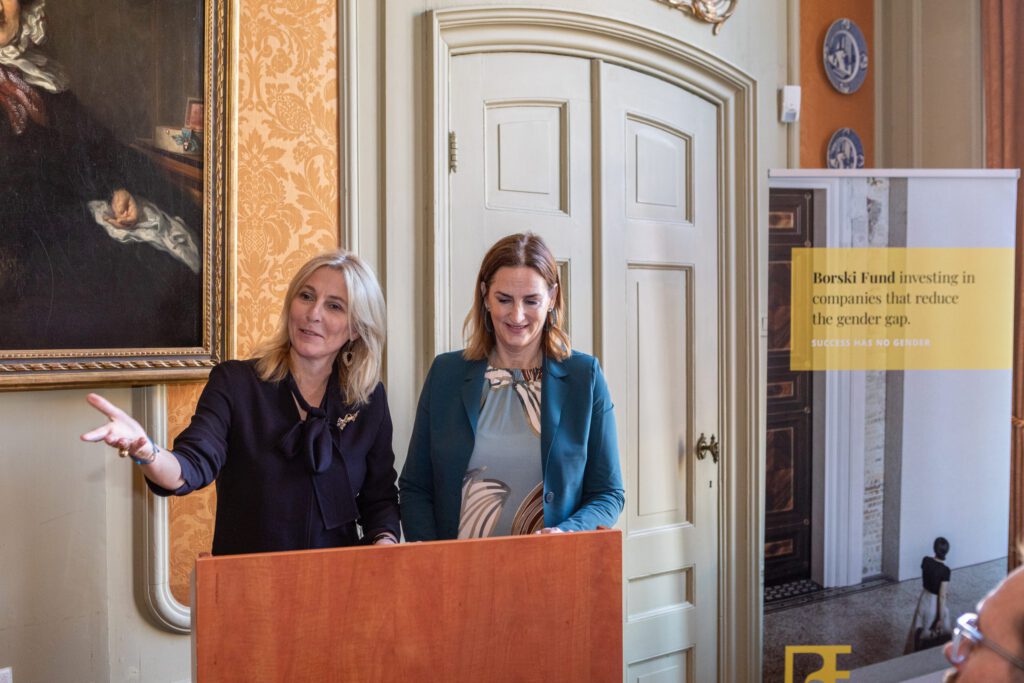
Op de foto oprichters Simone Brummelhuis en Laura Rooseboom tijdens de lancering van het Borski Fund in Amsterdam. Foto by Desiree Engelage.