
Expert blog – February 17, 2023
Hydrogen seems to be the magic word in the energy transition. But what exactly can we do with it? What are the opportunities and what are the caveats? Michiel Hickey, hydrogen expert at StartGreen, discusses the current state of research and the application of hydrogen in this blog.
Battery in gaseous form
‘Hydrogen is not the silver bullet of the energy transition. It is ‘a’ piece of the complete energy transition puzzle that we must solve together. Many people see hydrogen as the ideal replacement for fossil fuels, but it is not that simple. Hydrogen itself is not actually a fuel; it is an energy carrier, a kind of battery in gaseous form.
Large energy loss in conversions
Let me start at the beginning: how do you make hydrogen? The most sustainable way to produce hydrogen is with green electricity and water. Through electrolysis, you split water into hydrogen and oxygen. Unfortunately, a significant amount of energy is lost during the production process: the amount of energy stored in the hydrogen molecules is 25 percent less than the energy put in for production. If you then convert the hydrogen into water, energy is released. But you lose energy again in that process as well. Ultimately, 1 joule of energy yields 0.37 joules after these two conversions. Nevertheless, the application of hydrogen is interesting enough to investigate, for example, to balance supply and demand in the electricity grid.
Major advantages
In itself, it is logical that many people see hydrogen as the magic word in the climate crisis. Hydrogen can be widely applied: for heating, to store electricity, but also as a sustainable alternative in chemical processes, without CO2 emissions. Furthermore, it has a much higher energy density (joules per kg) than batteries: as much as a factor of 236 higher. Moreover, there are theoretically unlimited raw materials to produce hydrogen: you only need water and electricity.
Compression necessary
What makes application difficult is that while hydrogen has the highest energy density per kilogram of all elements in the universe, it also has one of the lowest energy densities per cubic meter. Hydrogen is a gas with very few molecules in a given volume. You can remedy this problem by A) compressing it: this stuffs more molecules into the same volume, B) cooling it very significantly, so that the molecules take up less space and you get more molecules in the same volume, or C) both.
Critical application
Hydrogen generation is currently still limited. This is mainly because it is still very expensive to make hydrogen; green hydrogen in particular is costly. At present, more than 90 percent of all hydrogen worldwide is still produced from fossil fuels. Moreover, there is not yet an infrastructure for storage and transport.
For every application, we must continue to ask ourselves whether it is the most energetically efficient solution and whether there is no logical, sustainable alternative. After all, it makes little sense to use an enormous capacity of renewable energy for the generation of hydrogen when we can also use it directly. We should therefore only use hydrogen where sustainability is very difficult to achieve, such as in the steel industry. The Natuur & Milieu foundation helps make those choices with a ‘hydrogen ladder’: a ranking of meaningful applications for green hydrogen.

Hydrogen as a buffer
Balancing the electricity grid—using hydrogen as a buffer for the electricity supply—ranks second on the ladder. We want to generate more and more electricity sustainably, but those sustainable generation methods are dependent on sun and wind. As a result, generation fluctuates strongly, while it is becoming increasingly difficult to match supply and demand. Grid congestion also plays an important role in this. We are looking for smart ways to reduce the differences between supply and demand. Hydrogen can offer a solution in this regard.
Not for passenger cars, but for freight transport
Passenger cars are currently better off running on a battery than on hydrogen. To be able to drive on hydrogen, you have to cool it very heavily and/or bring it under high pressure. To extract the electricity from hydrogen, you have to equip cars with a fuel cell. Meanwhile, electric driving works exceptionally well. Due to increasingly better batteries, the range is constantly growing and is already between three and four hundred kilometers. The development of charging infrastructure is also already well advanced in the Netherlands.
Trucks that have to travel long distances cannot yet run on a battery. Other heavy transport, such as excavators and ships, is also difficult to electrify. That is why it is a good solution for freight traffic and heavy transport.
In the table below, you can see approximately how many kilograms of fuel are needed to drive from Amsterdam to Eindhoven in an average passenger car and how many liters that would cost in an uncompressed state. As you can see, you need very little hydrogen (in kilograms), but in an uncompressed state, hydrogen takes up a much larger volume than the other fuels.
 Table: estimated passenger car consumption per fuel from Amsterdam to Eindhoven.
Not yet for aircraft
Hydrogen will also be a good solution for aircraft in the future. Flying on batteries is not feasible for the time being, and hydrogen is a reasonable alternative. Aircraft manufacturers are currently working hard to make aircraft suitable for hydrogen. That will take some time: we expect to be able to fly larger aircraft on hydrogen around 2050. Currently, it is still easier to use more environmentally friendly alternatives to kerosene, such as synthetic kerosene based on frying fat and other waste oils.
Accelerating the transition
The hydrogen ladder is a good instrument, but mainly for later, when there is sufficient supply. At this point in the hydrogen transition, I believe we should focus primarily on 1) making the technology mature and thus cheaper, 2) helping the hydrogen infrastructure get started, and most importantly: 3) stimulating both demand and supply, since there is no supply without demand and vice versa. StartGreen can play a role in accelerating this transition by providing appropriate financing to various initiatives.
StartGreen invests in hydrogen
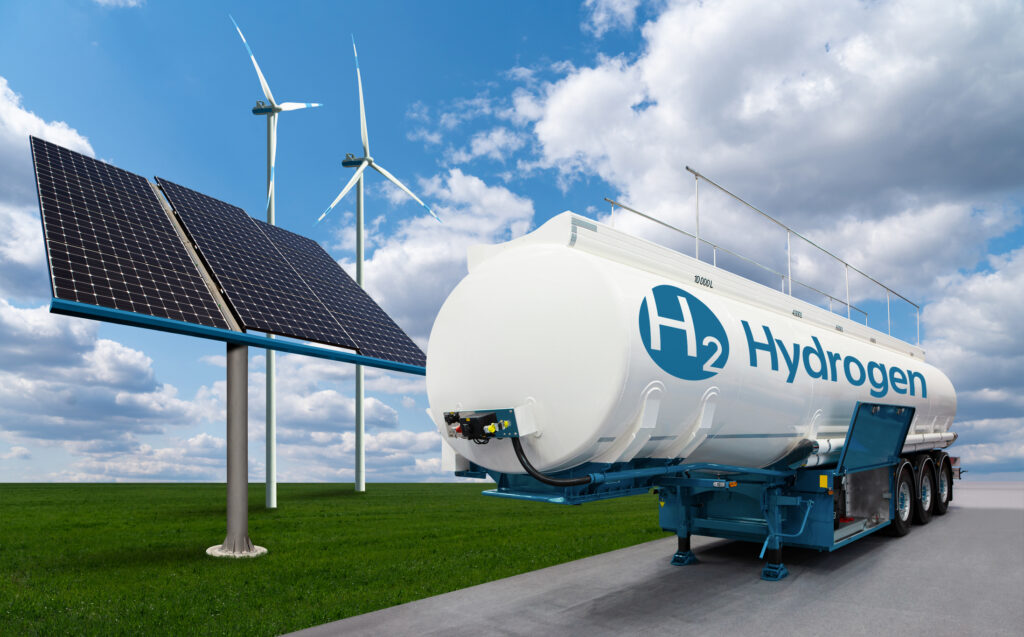
At StartGreen, we are therefore investigating promising hydrogen projects with a team of three people. In addition, we are looking at synergies within local hubs, where a renewable energy source such as wind turbines or a solar park is linked to both a generation and an off-take possibility for hydrogen.
Energiefonds Overijssel, for example, is exploring the financing possibilities for a smart energy hub, consisting of an electrolyser—powered by renewable electricity—and a hydrogen filling station. Another hub consists of wind turbines, an electrolyser, and guaranteed off-take by an inland vessel. For another project that is still in a very early stage, we are doing the business development.
Increasing supply
Fortunately, a lot of work is currently being done to increase supply. To achieve this, a lot of research is being conducted, especially into storage and conversion. The Netherlands wants to play a leading role in this and has a Hydrogen Roadmap. Participants are currently mainly large projects of hundreds of megawatts. The government and the EU are making serious subsidy amounts available, including for smaller projects. The latter is interesting for us. StartGreen, together with regional development agencies, can help get decentralized, small generation opportunities up to approximately 10 megawatts started with financing.
No chicken without an egg
My personal fascination with hydrogen goes back to high school, where I did my final project on hydrogen. Yet, in 2023, we are still truly at the beginning of a technological development. It will take some time before we can apply it widely. At the moment, both demand and supply are still very limited, but without demand, there is no generation. That is why every initiative is a bonus at this stage. It is the chicken-and-egg story: you have to create both demand and supply to get the infrastructure moving.
We as StartGreen can play a great role in this by making hydrogen more bankable. Banks and other institutional investors still find it too exciting to invest in hydrogen innovations. StartGreen’s funds can take more risk and invest earlier, so that the technology gets the opportunity to become more mature and thus more accessible to institutional investors.’

