
Attention to climate change has grown enormously in recent years. An older generation has been shaken awake and a new generation has risen. One that is increasingly in action mode to make an ‘impact’. I myself also made the transition from corporate strategy consultant to impact investor at StartGreen Capital. But what is impact investing and how do I distinguish myself from ‘regular’ investors? For every investment, I follow 5 simple principles to determine whether it concerns a ‘regular’ investment or an ‘impact’ investment. These rules ensure that I can continue to confidently say that I am an ‘impact investor’. And I would like to share them with you here.
1. Align with tested and accepted impact frameworks
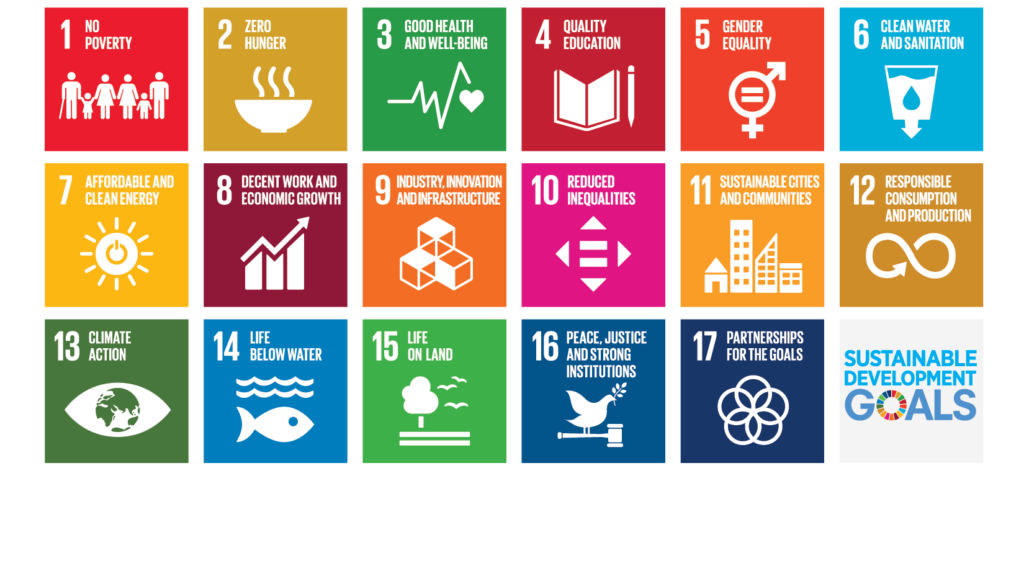
In the impact investing world, there are many extensive impact frameworks and methodologies that claim to know what impact is. They all only partially provide a method for measuring impact; however, I have fully embraced one of these frameworks (as have many in the world of impact investing): the UN SDGs. Why? Because these define impact across the full spectrum over 17 impact areas with 169 underlying targets, were established by the UN, and are internationally recognized. A uniform image of impact is created that can be used internationally by investors, entrepreneurs, and companies. Research by PwC shows that 72% of companies use the SDGs in some form in their reporting. For each investment, I therefore first determine which SDGs are affected and why. Based on the funds managed at StartGreen Capital, my focus is mainly on the energy transition and thus ‘SDG 7 – Affordable and Clean Energy’.
2. Choose (smart) solutions, not symptom management
Besides the SDGs, I determine whether a company only offers a ‘band-aid’ and primarily focuses on symptom management to reduce its own negative impact, or whether it is focused on ‘solving a social or environmental problem’ that affects society as a whole. An example of this is the difference between an investment in soot filters for a steel blast furnace plant—which is important and makes an impact, but is still a form of symptom management—or an investment in a new form of steel production that is CO2-neutral, which removes the problem entirely. That is impact investing, and I focus on investments for these types of smart solutions. For the classification of impact within investments, I recommend looking at the Impact classification report by the Impact Management Project.
3. Make the positive impact measurable and set goals
With the chosen SDGs as a basis, I can determine (together with the entrepreneur) which metrics contribute to the chosen SDGs, for example: TJ energy savings or CO2 emission reduction. For each investment, you create multiple metrics in this way, on which you can measure the intended impact, set goals, and especially compare them with current alternatives. When ‘claiming’ a saving, comparing the impact of your investment against current alternatives is crucial. For instance, electric driving can be a good alternative to fossil fuel cars if the electricity is also (largely) generated sustainably and the batteries can subsequently be properly recycled or reused. Every company is new and must be researched at the start of the investment and continuously tested throughout the duration of the investment. I usually perform calculations and research myself, but I recommend using recognized professional impact measurement parties if data is not available and/or it is very complex. StartGreen Capital currently has 65+ metrics on which it measures its impact on investments, linked to the SDGs. In addition, we set goals regarding the minimum impact we intend to achieve with an investment.
4. Also consider the negative impact
In addition to the positive impact, I also look at the negative impact through an extensive ESG (Environmental, Social, and Governance) scan. A company may claim to save CO2, but while achieving those CO2 savings, it might use strong toxins in the production process or encourage child labor through a supplier’s products. Internal business operations must also contribute positively (enough); therefore, internal processes must always be investigated. For every investment, I first look at whether there is a strong negative impact that I cannot accept (such as child labor), then whether the positive impact sufficiently outweighs the negative impact, and finally at where we see potential improvements to minimize the negative impact, in order to improve these from the very start of the investment.
5. Combine impact with profitability to create long-term impact
With charity, you make more impact not by giving a fish to someone who is hungry, but a fishing rod so they can become self-sufficient; this also applies to impact investing. A company must be able to make a profit independently (in the long term) and must be able to offer that perspective. The goal of this is, after all, that i) your investment continues to make as much impact as possible, and ii) that you eventually get your investment back (with a certain profit). It remains, of course, investing and not charity. As impact investors, we therefore only look at companies where profitability and profit on our investment are possible, where this can go hand in hand with making an impact. Maintaining the right balance is essential here, and there is room for loss-financing of impact startups.
What makes StartGreen Capital unique?
What distinguishes impact investors from regular investors is that we also believe there is and remains a good balance between making an impact and profitability, as both are our goals. It is therefore important that both investors and entrepreneurs commit to impact objectives and that profit is not the only major interest. There are interesting ways to do this, such as linking investor rewards to the realized impact, or working with Steward Ownership. These are constructs I would like to explain further in a future blog.
Let’s connect!
For now, I hope these principles provide enough guidance to gain more insight into what an impact investor does to be able to claim that they invest in ‘impact’. I would love to connect with you to discuss this further linkedin.com/in/rogier-de-groot-51096141.

